.png)
This is our chance to make the oil and gas industry clean up after themselves in New Mexico
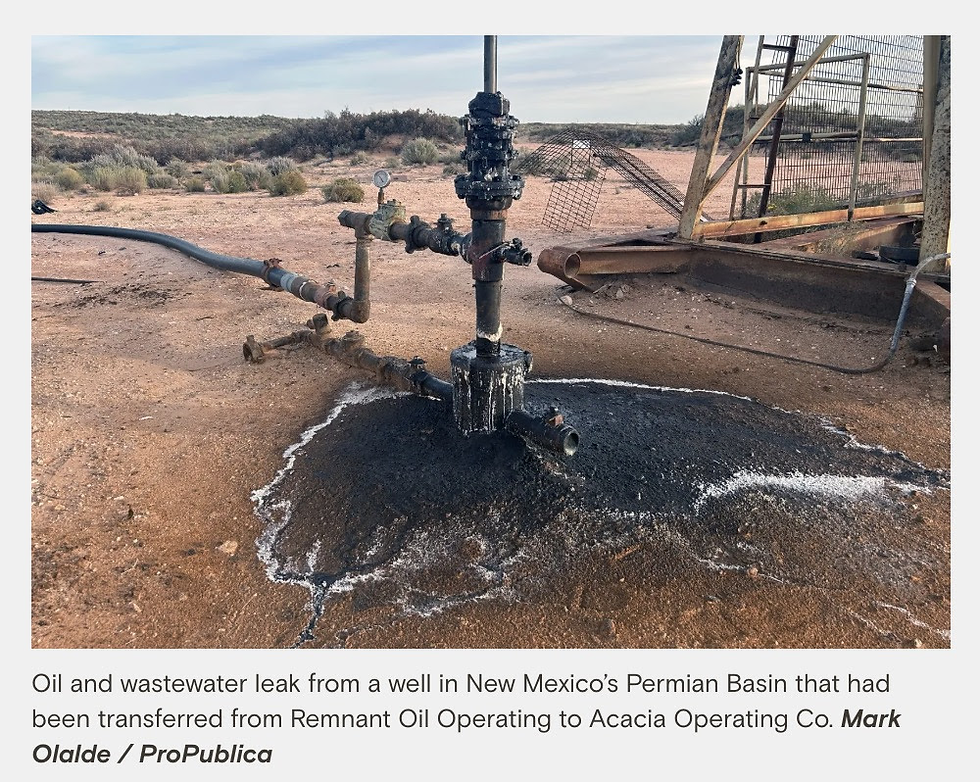
Today we have the chance to take proactive action for good regulation! We can hold the oil and gas industry in New Mexico accountable for properly plugging and remediating thousands of oil and gas wells drilled on state land across New Mexico.
In April the State Land Office proposed a new rule to strengthen bonding requirements for oil and gas development on state lands. Two public comment hearings will be held next week on May 27th and 28th at 9:00AM at the State Land Office (Morgan Hall, 310 Old Santa Fe Trail). The public can also participate online via zoom.
This proposed rule is critical because abandoned oil and gas wells can leak volatile organic compounds, benzene and other compounds that damage the human nervous, immune, and respiratory systems, and have the potential to pollute groundwater, affecting aquifers that New Mexicans depend on for drinking water.
The oil and gas industry can be expected to show up in force to oppose the proposed changes, because if adopted as written, the rule will interfere with the tried and true industry playbook - extract profit during a well's brief productive years and then, when production declines, sell the well and the legal responsibility for its cleanup to a small company that will pump out what it can and then declare bankruptcy if the state tries to enforce plugging and remediation requirements. The state ultimately shoulders the cost of cleanup, in several cases collecting just pennies on the dollar from insolvent operators.
Currently, oil and gas lessees are required to have a $10,000 bond on file to cover expenses for plugging abandoned wells and remediating the surrounding land - an amount that doesn't even come close to the true cost of plugging and remediation. Oil and gas companies will happily jump bail when the financial assurance bond they stand to lose is so insignificant.

According to the Legislative Finance Committee, the actual cost of plugging and remediating wells can vary from $120,000 to $303,000, depending on the type of well, and that doesn't even count remediation, which can extend into the millions.
The proposed rule:
Sets the new minimum per lease financial assurance requirement at $150,000 ($100,000 for mineral-only estate leases) for wells on state land.
Provides heightened bond requirements based on various risk categories, including the number of inactive wells, extremely marginal wells and unremediated spills on a lease, a history of bond claims and other compliance-related factors.
Establishes an annual report requirement so that lessees are in regular communication withthe NMSLO about lease infrastructure, status of operations (e.g., inactive wells, pluggedwells, spills) and other conditions that may affect financial assurance requirements.
Provides for inflationary adjustments to financial assurance levels every five years.
More specifics about the proposed rule are available on this one pager.
We are calling for the addition of one more provision - that operators with a pattern of multiple major spills or releases of produced water due to equipment failure, corrosion, blow outs, and human error also be subject to heightened bond requirements because of the environmental risks that their operations pose to our water and health. A WildEarth Guardians report documents a reported 38,153 spills of toxic produced water statewide, an average of 104 spills per day, in 2025 alone. Liquid spills occurred every six to seven hours, resulting in more than 9.4 million gallons of liquid waste released into the environment. More than 3.5 million gallons were permanently “lost” into soil, groundwater, and ecosystems, contaminating at least 15 waterways last year. These spills are self reported and rarely result in any consequences, despite consistent repeat offenses.
The oil and gas industry likes to argue that it already pays for abandoned well cleanup through the fees it pays into a Reclamation Fund, but that fund is intended only to cover wells abandoned by bankrupt actors. This still leaves the state to clean up after industry, and does not satisfy the legally binding and ethical obligation of individual companies to clean up after themselves.
Importantly, even after the industry successfully passed a bill to apply more of the Oil and Gas Reclamation fund (currently $74 million) to plugging and remediation in January (taking necessary funding away from agency operational costs), the total amount expected to accumulate in the fund annually doesn't come anywhere close to the potentially billions of dollars needed to cleanup existing abandoned and soon-to-be-abandoned wells. That was just an excuse for continued inaction on financial assurance legislation.
Bottom line - if the state does not require the oil and gas industry to put down serious money as surety, the oil and gas industry will never clean up after themselves.


Comments